
For many people, green water immediately triggers the same assumption: pollution.
And along Peninsular Malaysia’s west coast, especially around the Straits of Malacca, that perception is common. Compared with the clearer blue waters often associated with island marketing and tropical holiday imagery, green water can easily feel less appealing at first glance.
But green water does not automatically mean dirty water.
In many cases, the colour has more to do with plankton, sediment, light, and water movement than with the simplistic idea that the sea is somehow “bad”.
What this article is for:
This quick explainer is for travellers, divers, and curious readers wondering why parts of Peninsular Malaysia’s west coast often appear green rather than blue.
Key Takeaways
- Green water does not automatically mean pollution
- Plankton and suspended particles can strongly affect water colour
- The Straits of Malacca behaves differently from Malaysia’s more open eastern seas
- Green water and low visibility are related sometimes, but not always
- Productive water can also support rich marine life
The short answer
A lot of the green appearance comes from a combination of:
phytoplankton
suspended particles and sediments
coastal and strait-like water conditions
how light behaves in the water
In other words, water colour is influenced by what is in the water and how the environment behaves, not just whether the area is polluted.
What phytoplankton has to do with it
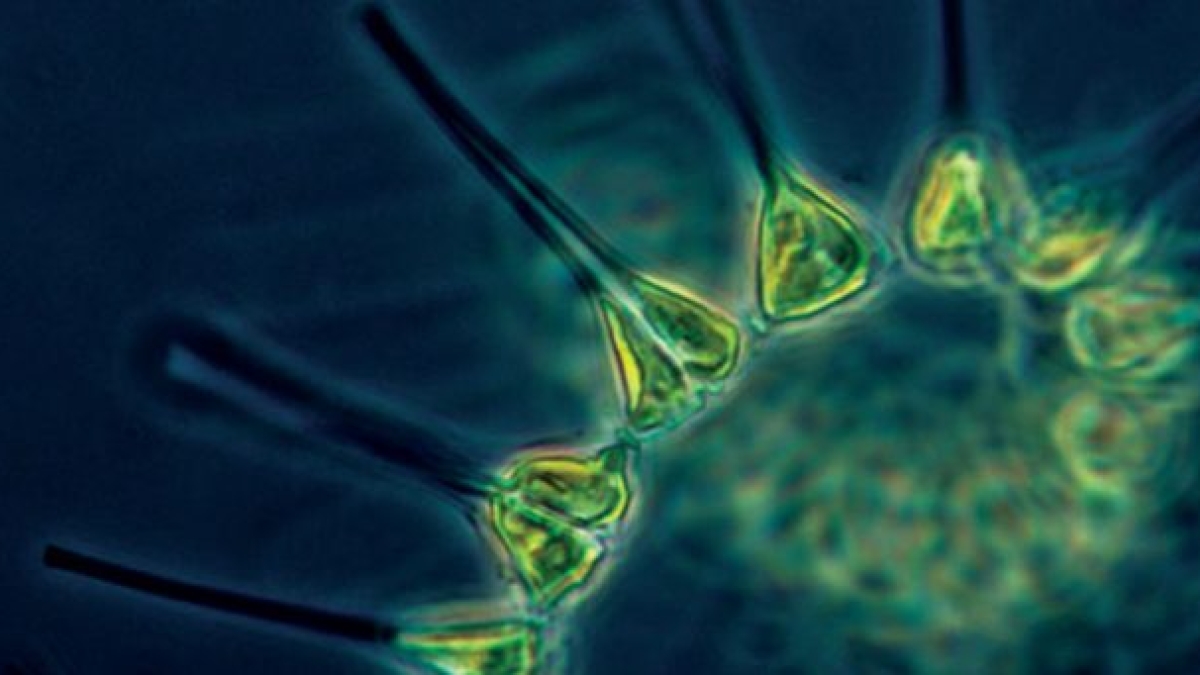
Phytoplankton are microscopic plant-like organisms that live in the water and form a crucial part of the marine food web.
They contain chlorophyll, which is associated with green pigmentation. When phytoplankton concentrations are higher, the water can take on a greener appearance.
That is not inherently a bad thing. In fact, phytoplankton plays an essential ecological role and supports wider marine productivity.
Of course, excessive algal blooms can be a separate issue in some places and under some conditions. But green water by itself is not enough to conclude that something is wrong.
Why the west coast looks different from the east coast

This is where geography matters.
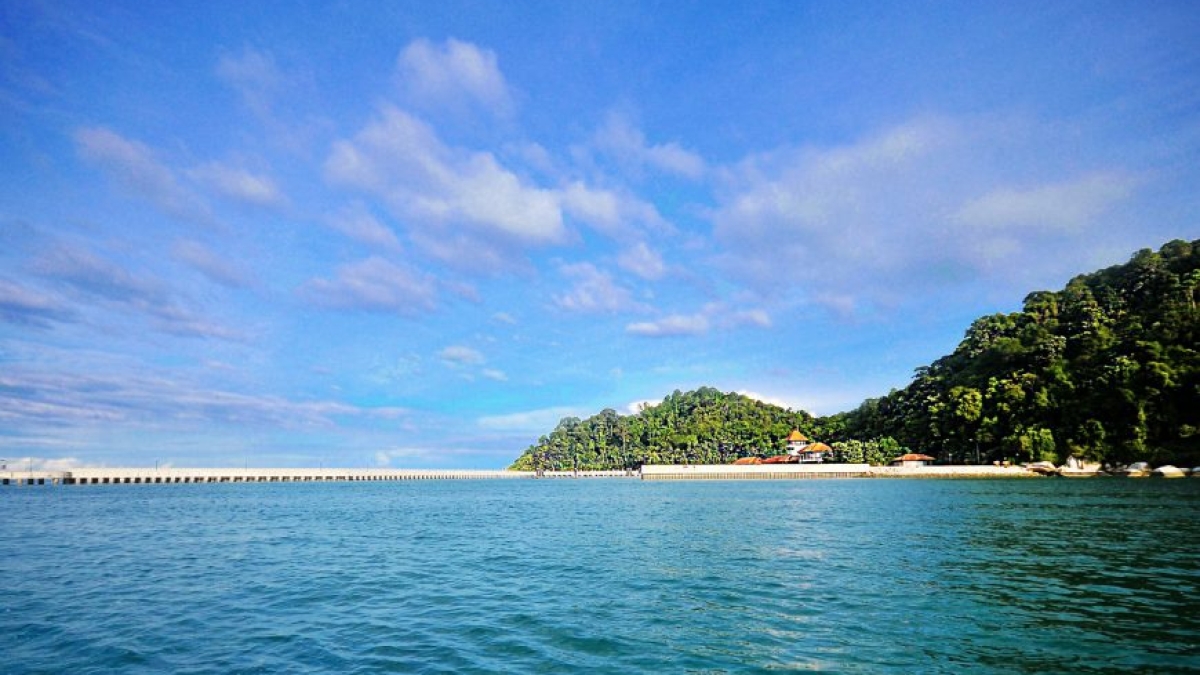
The waters along Peninsular Malaysia’s west coast, especially around the Straits of Malacca, are very different from the more open, clearer waters of the South China Sea side.
The strait is shallower, more enclosed, more sediment-influenced, and behaves differently in terms of water exchange and circulation. That means particles, nutrients, and plankton can remain more concentrated, which affects both colour and visibility.
So comparing west coast water directly with east coast island water is not really a like-for-like comparison.
Does green water always mean poor visibility?
Not always.
Green water often suggests more suspended matter or plankton in the water, which can reduce visibility, but the relationship is not absolute. Visibility depends on multiple factors, including:
plankton density
sediment load
current movement
recent weather
runoff
boat activity
seasonal conditions
So yes, green water can sometimes mean lower visibility, but not every green site is automatically a bad dive or a poor marine environment.
A common misconception about “beautiful” water
People often associate blue water with health and green water with pollution. That is understandable, but it is also a very tourism-shaped way of seeing the ocean.
Blue water is visually striking and widely used in travel marketing. But greener, more nutrient-rich waters can also be biologically productive and ecologically important.
In simple terms, water that looks less postcard-perfect is not necessarily less alive.
Insider insight
Many divers learn this quickly: water colour and dive quality are not always the same thing. Some sites with less glamorous surface colour can still offer rewarding marine life, interesting ecosystems, and worthwhile local diving.
So is it pollution or not?
Sometimes pollution can affect coastal water quality, of course. It would be unrealistic to pretend otherwise in any busy maritime region.
But the point is this: green water alone is not proof of pollution.
It is often the result of natural and geographic factors, especially in productive coastal waters and straits. The better question is not “Why is it green?” in a simplistic sense, but “What environmental conditions are shaping this water?”
Final thought
Not every sea is meant to look like a postcard.
The waters along Peninsular Malaysia’s west coast have their own character, shaped by geography, productivity, and movement. Green water may not fit the usual tropical cliché, but that does not make it lifeless or undesirable.
Sometimes it simply means you are looking at a different kind of marine environment, one that deserves to be understood before it is judged.