
Scuba diving can feel like a big step at first.
For many beginners, the questions usually sound familiar: Do I need to be a strong swimmer? Is it dangerous? Is certification expensive? What actually happens during the course?
The good news is that learning to dive is far more approachable than many people assume. With proper training, a reputable instructor, and the right mindset, scuba diving can open the door to a completely new way of experiencing the ocean.
This guide is intended for:
Anyone curious about learning to scuba dive for the first time and wanting a clear, realistic overview before signing up for a beginner course.
Key Takeaways
- You do not need to be an elite swimmer to start scuba diving
- Proper training is what makes diving accessible and safer
- Entry-level certification is designed for beginners
- Learning to dive usually includes theory, confined water practice, and open water training
- Choosing a reputable instructor or dive centre matters as much as the course itself
Why people get hooked on scuba diving
Diving gives you access to a world most people never truly experience.
It is not just about seeing fish or coral. It is the feeling of breathing calmly underwater, moving in three dimensions, and discovering a quieter, slower environment that changes how you relate to the sea.
That is why divers often talk about it with so much affection. Once you have experienced that combination of adventure, calm, and discovery, it tends to stay with you.
Do you need to be a good swimmer to scuba dive?
Not in the way many people think.
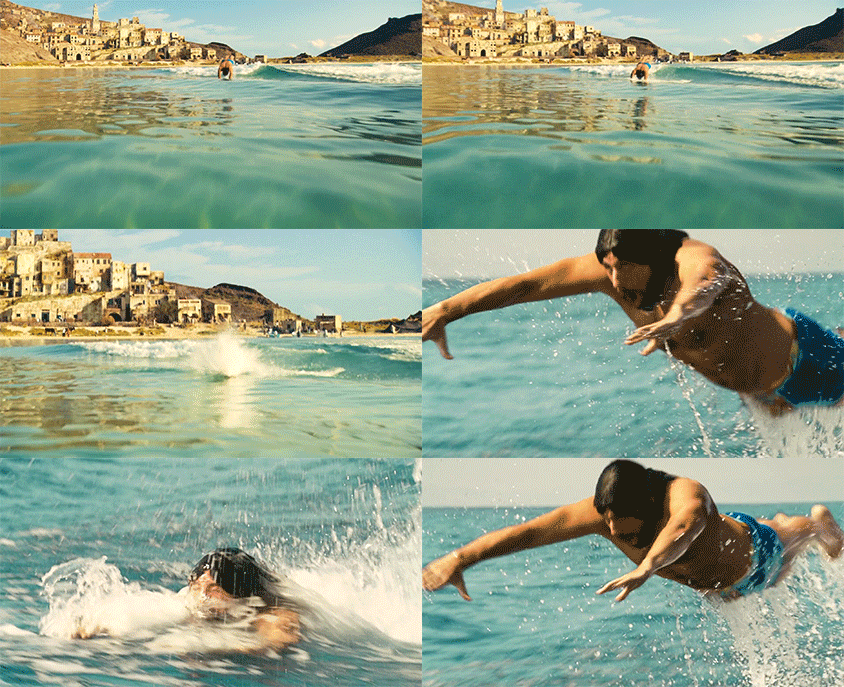
You do not need to swim like a competitive athlete, but you do need to be reasonably comfortable in the water. What matters more is water confidence, the ability to stay calm, follow instructions, and move comfortably on the surface and underwater.
Most beginner scuba courses include simple water-based assessments and confined water practice to help build confidence gradually. Diving is not a speed sport. In fact, relaxed movement and calm breathing are part of what make it work.
Is scuba diving dangerous?
Scuba diving is an activity that carries risk, but it is not inherently reckless when done properly.
Like many adventure activities, safety depends heavily on training, judgment, equipment, and staying within your limits. Problems are far more likely when divers cut corners, ignore procedures, or dive beyond their experience.
This is exactly why certification exists. The purpose of training is not to make diving feel intimidating. It is to make it safer, more structured, and more enjoyable.
A better way to think about it is this: scuba diving rewards calm, educated, well-prepared people.
Do you need certification to dive?
For most recreational diving, yes.
Certification is the standard entry point because it teaches the fundamentals needed to dive responsibly and safely. That includes understanding basic dive theory, pressure effects, buoyancy control, equipment use, underwater communication, and emergency procedures.
Without training, a person may be able to put on the gear, but that is not the same as being ready to dive safely.
What does a beginner scuba course usually include?
Most entry-level open water courses include three main parts.
1. Knowledge development
This covers the basic theory behind scuba diving. You will learn about pressure, buoyancy, breathing gas, equipment, safety rules, and the body’s response to being underwater.
It sounds technical at first, but beginner materials are designed to be understandable and practical, not academic for its own sake.
2. Confined water training
This usually takes place in a swimming pool or calm shallow water. It is where you get comfortable with the gear and practise core skills in a controlled setting.
This is also where you learn how to handle simple issues like mask clearing, regulator recovery, buoyancy basics, and other foundational safety skills.
3. Open water dives
This is where everything starts to come together. Under instructor supervision, you apply what you have learned in actual open water conditions.
For most people, this is the moment diving starts to feel real and exciting. It is also where confidence begins to build quickly.
Is scuba certification expensive?
That depends on where you do it, what is included, and the quality of the operator.
As a beginner investment, scuba certification is often more accessible than people expect, especially when you consider that it can unlock years of future diving experiences. The cheapest option is not always the best one, though. Course quality, instructor attention, equipment condition, and safety culture matter far more than squeezing the price down to the lowest possible number.
A better question is not just “How cheap can I find it?” but “Am I learning with the right people?”
What if none of your friends dive?
That is not a problem.
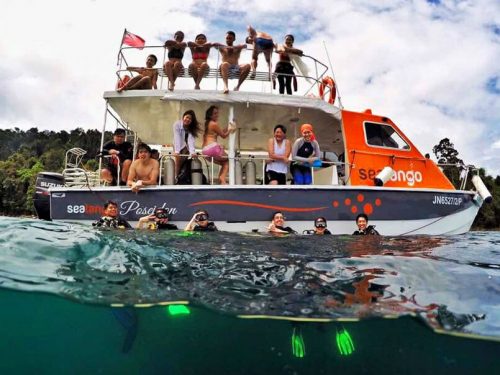
Scuba diving is one of the easiest ways to meet people through a shared experience. Divers often travel solo, join group trips, and build friendships quickly through courses, dive centres, and shared time on boats and at resorts.
You do not need a ready-made dive circle before starting. In many cases, diving is how people find one.
Is snorkelling enough, or is scuba really that different?
They are very different experiences.
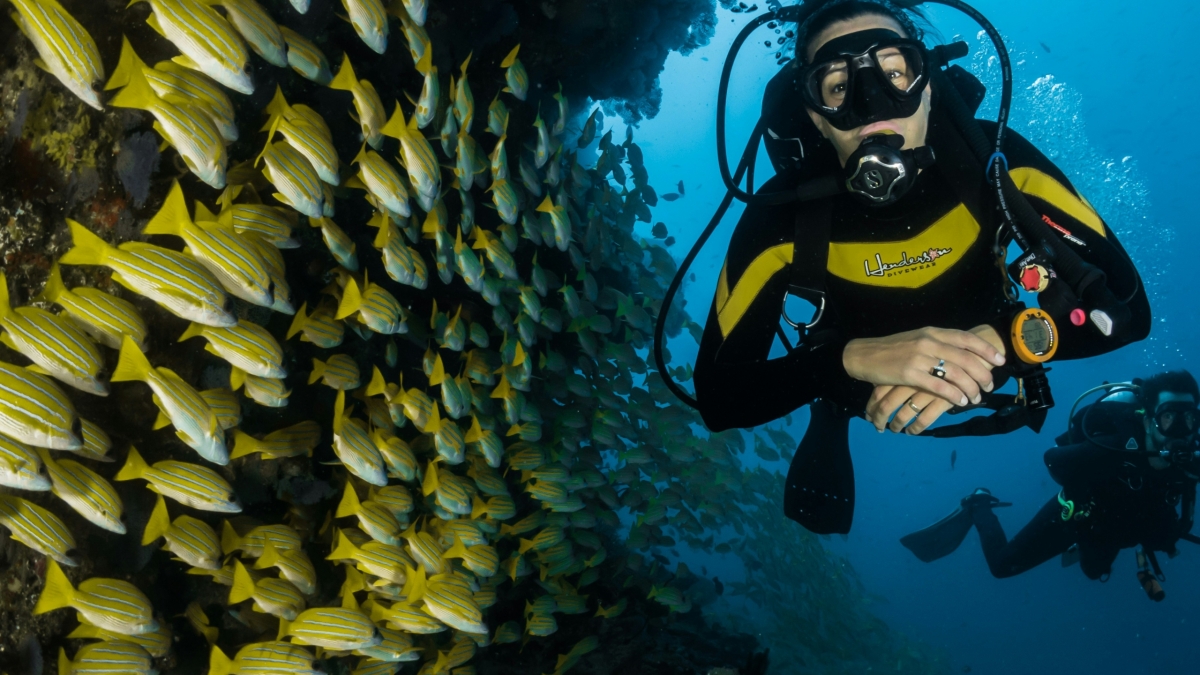
Snorkelling lets you observe the underwater world from the surface. Scuba diving lets you enter it more fully, move through it more deliberately, and spend longer experiencing what is happening below.
That does not make snorkelling lesser in every context, but it does mean scuba offers a depth of immersion that surface-only activities cannot match.
For many people, enjoying snorkelling is actually a good sign. It often means you already like being in the water, which can make learning to dive feel much more natural.
Insider Tip
The best beginners are not always the boldest. They are usually the ones who stay calm, ask questions, and let confidence build step by step.
How to choose the right place to learn
A beginner course is not just about earning a certification card. It is about building your first relationship with diving, so where you learn matters.
Look for:
reputable instructors and recognised training agencies
clear communication before the course
well-maintained gear
a patient teaching style
realistic class sizes
a safety-first culture rather than a rushed, sales-heavy approach
A good instructor can make the learning process feel exciting and reassuring at the same time.
Common Questions
Can I learn to dive if I feel nervous?
Yes. A lot of beginners feel nervous at first. Good instructors expect this and build confidence progressively.
What is the minimum age to start scuba diving?
This varies by training agency, but many beginner programmes start from around age 10.
Do I need to buy all my own gear first?
No. Most beginner courses include rental equipment, so you usually do not need to buy a full set to get started.
How long does it take to get certified?
This depends on the course structure and operator, but many beginner certifications are completed over a few days or across a short holiday schedule.
Is diving only for very fit or adventurous people?
Not at all. Recreational scuba diving is accessible to a wide range of people, provided they are medically fit to dive and trained properly.
Final thought
You do not need to be fearless, ultra-athletic, or already part of the dive community to begin.
You just need curiosity, a willingness to learn, and the right people to guide you through the first steps.
For many divers, the hardest part is simply deciding to start. After that, the process becomes much more straightforward and a lot more enjoyable than expected.
And once you do take the plunge, you may find that the ocean opens up in ways you did not quite imagine from the surface.