
Getting certified often leads to the same question: now what do I actually need to buy?
Once diving stops being a one-off experience and starts feeling like a real hobby, gear quickly enters the conversation. That is where things can get confusing. There are discounts, strong opinions, shiny kit, and plenty of pressure to buy more than you actually need.
The smarter approach is not to buy everything at once. It is to prioritise based on how often you dive, what kind of diving you do, and which pieces genuinely improve safety, comfort, and long-term value.
What this guide is for:
Recreational divers who have recently been certified or are starting to dive more regularly and want a sensible way to think about their first gear purchases.
Key Takeaways
- Not every diver needs a full personal kit right away
- The right purchase order depends on how often you dive and where you dive
- Personal comfort items usually come first
- Safety-critical items deserve serious attention
- Expensive gear does not automatically make you a better diver
Start with a simple question: what kind of diver are you?
Before buying anything, be honest about your actual diving pattern.
If you only dive once a year on holiday, there is usually no strong case for buying a full setup immediately. Reputable dive centres should have serviceable rental gear, and for occasional diving that may be the most practical route.
But if you are starting to dive regularly, taking trips more often, or already know this is becoming a serious hobby, then buying your own gear begins to make more sense.
The goal is not to look fully kitted out. The goal is to invest where it matters most.
First purchases: the personal comfort basics
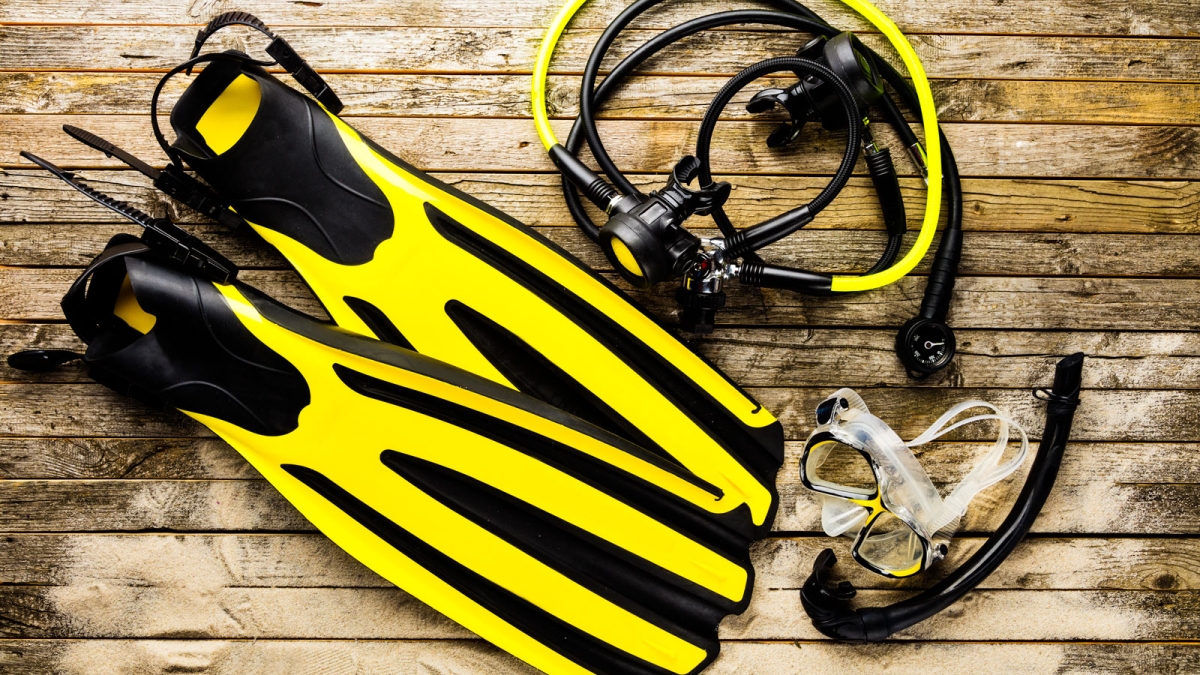
For many recreational divers, the best starting point is:
mask
snorkel
fins
These are often the most sensible early purchases because they are relatively affordable, easy to transport, and highly personal in terms of fit and comfort.
Mask
A well-fitting mask makes an immediate difference to your dive experience. Poor fit leads to leaks, distraction, and unnecessary frustration. This is one item where personal fit matters far more than looks.
Snorkel
Not every diver uses a snorkel heavily on every trip, but it is still a practical and inexpensive item to own if it suits your diving style and local conditions.
Fins
Fins are worth choosing carefully because they affect comfort, efficiency, and fatigue. A pair that suits your leg strength, kicking style, and diving environment will serve you better than simply buying the stiffest or most “professional-looking” option.
These three items are also nice to own because they are the most personal from a hygiene and familiarity standpoint.
Next priority: safety-related gear
Once you move beyond the basics, safety should start driving your next purchases.
Dive computer
A dive computer is one of the most worthwhile investments a recreational diver can make.
It helps you monitor your profile, track depth and time, manage no-decompression limits, monitor ascent rate, and make surface intervals more accurately. It also becomes especially useful on multi-day dive trips where repetitive diving is involved.
For many modern divers, a computer is no longer a luxury item. It is a core piece of personal safety gear.
Surface markey buoy (SMB)
An SMB is small, relatively inexpensive, and easy to underestimate.
But in situations involving drift, boat traffic, current, or surfacing away from the boat, it becomes a very meaningful safety tool. Knowing how to deploy one confidently is just as important as owning it.
If you are diving regularly, especially from boats, this is a smart addition earlier rather than later.
What about exposure protection?
This depends heavily on where you dive.
Tropical divers
If most of your diving is in warm water, a wetsuit or thermal layer is often the next practical buy. The reasons are straightforward: fit, comfort, hygiene, and familiarity.
A properly fitted wetsuit is usually more comfortable than rental suits, and repeated divers will appreciate having something that fits consistently trip after trip.
Cold-water divers
If you are diving in colder conditions, exposure protection becomes even more important. In that case, fit and suitability matter a lot more, and this category moves up the priority list quickly.
Either way, exposure protection is not just about warmth. It also affects comfort, energy, and how enjoyable the dive feels over time.
Regulator of BCD first?
If you are now moving into more serious ownership territory, this is usually where the real spending starts.
Between the two, many divers are better served prioritising a regulator first.
Why? Because it is literally your breathing system underwater. A good regulator, properly maintained, can serve you for years and has a more direct safety role than a BCD. This is not the place to buy purely on sale price or appearance.
That does not mean you need the most expensive regulator on the shelf. It does mean this is one category where reliability, serviceability, and long-term confidence matter more than flashy branding.
Then the BCD
A BCD is important, but the “right” one depends heavily on your actual diving style.
Think about:
do you travel often and need something lighter?
do you mostly do warm-water recreational diving?
are you interested in technical progression later?
do you value simplicity, comfort, or packing efficiency most?
The best BCD is not the fanciest one. It is the one that fits well, suits your diving, and does the job properly.
A sensible recreational purchase order
For many recreational divers, the order often looks something like this:
Mask
Fins
Snorkel if relevant to your style
Dive computer
SMB
Exposure suit
Regulator
BCD
That order is not universal, but it is a sensible baseline for many warm-water recreational divers.
Insider Tip
The best gear investment is often the one that removes friction from your actual diving, not the one that looks most impressive on land.
When not to rush into buying gear
It is perfectly reasonable to wait if:
you dive very infrequently
you are still figuring out what type of diving you enjoy
you have not yet developed strong preferences
you mainly dive at reputable operators with well-maintained rental equipment
Owning gear is not a badge of seriousness by itself. Plenty of divers buy too early, buy the wrong things, or end up replacing gear quickly because they purchased before understanding their own habits.
Common buying mistakes
Buying for image instead of use
A lot of gear looks exciting. That does not make it the right first purchase.
Over-prioritising discounts
A sale is only useful if the item was already right for you.
Buying advanced-style gear too early
Some newer divers buy equipment based on the kind of diver they imagine becoming rather than the kind of diver they actually are right now.
Ignoring fit
This matters especially for masks, fins, exposure suits, and BCDs.
Assuming expensive means better for you
Price and suitability are not always the same thing.
Common Questions
Should I buy a full set of gear right after certification?
Usually no. Most divers are better off building their kit gradually.
Is rental gear safe?
At reputable dive centres, it should be maintained and serviceable. The key is choosing operators carefully.
What is the single best early investment?
For many divers, it is a well-fitting mask and a personal dive computer.
Do I need my own BCD right away?
Not necessarily. It usually makes sense later, once you know your preferences and dive more regularly.
What if I mainly dive on holiday?
A personal mask, fins, and possibly a computer often make more sense than buying a full setup too early.
Final thought
Buying dive gear should not feel like a race.
The goal is not to own everything as quickly as possible. It is to build a setup that matches your real diving life, improves safety and comfort, and grows with you over time.
Start with what is personal. Prioritise what protects you. Add the rest as your diving becomes more regular and your preferences become clearer.
That usually leads to better decisions and far fewer expensive regrets.